Otitis media in children is a common health problem. It means a middle ear infection in children. Many kids experience this at least once. In fact, ear pain in kids is often caused by otitis media. Because it can be painful and worrying, parents want to know more. This guide explains otitis media symptoms, causes, diagnosis, treatment, and ways of preventing ear infections. Knowing the facts helps you care for your child’s health.
What is Otitis Media in Children?
Otitis media is an infection or swelling of the middle ear. The middle ear is the space behind the eardrum. Usually, this area should be filled with air. However, when germs enter, fluid can build up. This leads to pain and sometimes fever. Otitis media in children is most common between ages 6 months and 3 years. According to the CDC, it is one of the top reasons kids visit doctors. Although it can happen at any age, young children are at higher risk.
Common Symptoms
Children may not always say they have ear pain. Still, there are signs you can watch for. Early detection helps prevent problems. Here are common otitis media symptoms:
- Ear pain or pulling at the ear
- Trouble hearing or responding to sounds
- Fever, often above 100°F (37.8°C)
- Fussiness or crying more than usual
- Trouble sleeping
- Fluid draining from the ear
- Loss of balance
- Loss of appetite
Sometimes, symptoms are mild. But in other cases, they can be severe. If you notice these signs, it is important to act quickly.
Main Causes and Risk Factors
Otitis media in children happens when bacteria or viruses infect the middle ear. Often, it follows a cold or sore throat. The Eustachian tube, which connects the ear to the throat, can get blocked. This blockage traps fluid and germs. Several factors increase the risk:
- Young age (especially under 3 years)
- Attending daycare or being around other children
- Exposure to tobacco smoke
- Family history of ear infections
- Using a pacifier often
- Not being breastfed
- Allergies or frequent colds
Because these factors are common, many children get at least one ear infection.
How Otitis Media is Diagnosed
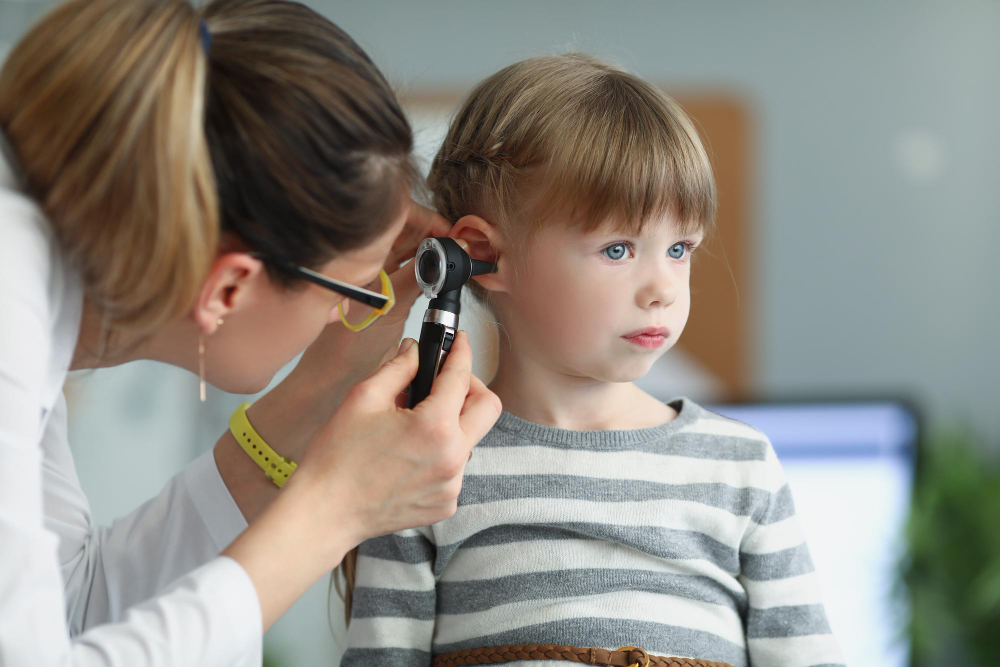
Doctors use a few simple steps to diagnose otitis media in children. First, they ask about symptoms. Next, they look inside the ear with a special tool called an otoscope. This tool helps them see if the eardrum is red, swollen, or has fluid behind it. Sometimes, doctors use a device to check if the eardrum moves normally. In rare cases, hearing tests may be needed. Usually, diagnosis is quick and does not hurt your child.
Treatment Options
Treatment for otitis media in children depends on the cause and severity. Many mild cases get better on their own. However, doctors may suggest:
- Pain relievers like acetaminophen or ibuprofen
- Warm compress on the ear for comfort
- Antibiotics if the infection is bacterial and symptoms are severe
- Ear drops for pain (if recommended by a doctor)
It is important to finish all antibiotics if prescribed. Do not give your child any medicine without checking with your doctor first. In rare cases, if infections keep coming back, a doctor may suggest ear tubes to help drain fluid.
Prevention Tips for Parents
While you cannot prevent every ear infection, you can lower your child’s risk. Here are some helpful tips for preventing ear infections:
- Keep your child away from tobacco smoke
- Wash hands often to stop the spread of germs
- Breastfeed your baby if possible
- Limit pacifier use, especially after 6 months
- Keep your child’s vaccines up to date
- Avoid putting your child to bed with a bottle
- Encourage your child to avoid sick playmates
Following these steps can help protect your child’s ears.
When to See a doctor
Sometimes, otitis media in children needs medical care. You should call your doctor if:
- Your child has ear pain that lasts more than one day
- There is fluid or pus coming from the ear
- Your child has a high fever or seems very ill
- Hearing problems do not go away
- Symptoms return after treatment
If your child shows signs of otitis media, consult Dr. Ramya R, ENT specialist, for personalized care. Early help can make a big difference in your child’s comfort and health.